Clear aligner candidacy depends on three factors: case complexity, periodontal health, and the patient’s ability to wear trays 20 to 22 hours per day. Patients with mild to moderate crowding, spacing, and bite issues who commit to consistent wear qualify for aligner therapy. Those with severe rotations, significant skeletal discrepancies, active gum disease, or a history of non-compliance need traditional braces or a combined approach . For adults in Laguna Niguel, Aliso Viejo, and across South Orange County evaluating their options, an honest assessment of candidacy prevents wasted time and unexpected treatment conversions.
Dr. Todd Snyder practices cosmetic and restorative dentistry at Aesthetic Dental Designs in Laguna Niguel, California. His practice offers clear aligner therapy as part of comprehensive cosmetic dentistry treatment. Patients from Mission Viejo, Dana Point, Laguna Beach, San Juan Capistrano, and surrounding communities seek his guidance on whether aligner therapy fits their case.
Candidacy is not a marketing decision. It is a clinical judgment based on tooth position, root anatomy, bone support, and patient behavior. The cosmetic dentistry guide provides broader context on how orthodontic treatment fits into complete smile enhancement, and the smile makeover overview explains how alignment combines with other cosmetic treatments.
Table of Contents
Key Takeaways (TL;DR)
- Mild to moderate cases qualify for aligner therapy: Crowding, spacing, and minor bite corrections respond predictably when patients wear trays as directed .
- Severe rotations and skeletal discrepancies need braces: Fixed appliances provide the mechanical control that plastic trays cannot deliver for complex movements .
- Healthy gums and bone are prerequisites: Active periodontal disease must be treated and stabilized before aligner therapy begins .
- Compliance history predicts aligner success: Patients who struggle with daily routines or lose retainers often fail aligner therapy and require conversion to braces .
- Approximately 30 to 40 percent of orthodontic patients are not ideal aligner candidates: A thorough evaluation determines whether aligners alone, braces, or a hybrid approach delivers the best outcome .
Who Makes an Ideal Clear Aligner Candidate?
Ideal clear aligner candidates have mild to moderate malocclusion, healthy periodontal tissue, and a demonstrated ability to follow through with daily wear requirements. Adults with anterior crowding, minor spacing, or relapse after previous orthodontic treatment represent the classic aligner patient .
The American Association of Orthodontists reports that one in three orthodontic patients is now over 18, with 1.9 million adults in active treatment. Adults gravitate toward aligner therapy because the trays are removable, nearly invisible, and impose fewer dietary restrictions than fixed appliances .
Ideal candidates share several characteristics:
- Mild to moderate crowding or spacing affecting the anterior teeth
- Minor rotations that respond to sequential aligner changes
- Healthy gums with pocket depths of 1 to 3 millimeters and no bleeding on probing
- Adequate bone support confirmed by radiographs
- Willingness to wear aligners 20 to 22 hours per day
- Ability to keep track of trays and maintain regular progress appointments
- No active tooth decay or untreated dental infection
Patients who have completed orthodontic treatment previously and experienced minor relapse are often excellent aligner candidates. The movement required is typically small, and the patient already understands the importance of retention. Aligner therapy for relapse correction frequently completes in six to twelve months.
How Does Case Complexity Determine Aligner Candidacy?
Case complexity determines whether aligners can predictably achieve the desired tooth movements. Aligner mechanics favor crown tipping and bodily translation, while struggling with movements that require precise root control, significant extrusion, and derotation of round teeth .
A 2025 systematic review and meta-analysis comparing clear aligners to fixed appliances found that aligner treatment was associated with worse outcomes for certain complex movements. The authors concluded that fixed appliances retain biomechanical superiority for challenging cases .
Approximately 30 to 40 percent of orthodontic patients are not ideal candidates for clear aligners alone. Patients in this group may still benefit from a hybrid treatment plan that uses braces for the complex movements and aligners for finishing and detailing .
What Health Factors Affect Clear Aligner Candidacy?
Periodontal health and bone support determine whether teeth can move safely. Active gum disease, untreated decay, and inadequate bone compromise aligner therapy and increase the risk of complications.
About 4 in 10 U.S. adults 30 years or older had some level of periodontitis in 2009–2014, according to CDC data. Periodontitis destroys the bone and connective tissue that support teeth. Moving teeth through inflamed, diseased tissue produces unpredictable results and accelerates bone loss .
The following health factors must be addressed before aligner therapy begins:
Absolute Contraindications
- Active periodontitis with bone loss
- Untreated tooth decay or abscess
- Severe TMJ disorder requiring stabilization
- Inadequate bone support for planned movements
- Non-compliance with wear requirements
Relative Contraindications
- Gingivitis (treatable with cleaning and improved hygiene)
- Medication-induced gingival overgrowth
- Bruxism requiring occlusal guard
- Multiple crowns or bridges on teeth to be moved
- History of poor retainer compliance
Patients who take medications that cause gingival overgrowth, such as certain anticonvulsants, immunosuppressants, and calcium channel blockers, may need coordination with their prescribing physician before aligner therapy. The National Institute of Dental and Craniofacial Research notes that some medications reduce saliva flow or cause abnormal gum tissue growth .
Existing dental restorations also affect candidacy. Teeth with full-coverage crowns may not retain attachments well, and clear aligners can struggle to move teeth with large composite fillings or root canal treatment. A dentist evaluates each tooth individually during treatment planning.
Why Does Compliance Determine Aligner Candidacy?
Compliance determines whether aligner therapy succeeds or fails. Aligners only move teeth when they are in the mouth. Patients who cannot commit to wearing trays 20 to 22 hours per day should not begin aligner treatment .
Research shows 10 to 30 percent of aligner patients fail to meet minimum wear hours. Compliance commonly declines as treatment progresses, with some patients wearing aligners only 12 to 14 hours by treatment end rather than the required 20-plus .
Dentists assess compliance likelihood through patient history and lifestyle factors:
- Has the patient successfully worn a retainer or nightguard in the past?
- Does the patient’s daily routine allow for removing and reinserting trays during meals?
- Does the patient travel frequently or work in environments where tray removal is impractical?
- Has the patient demonstrated follow-through with other health recommendations?
- Does the patient understand that aligner therapy requires active participation?
Compliance alternatives: For teens and adults with compliance concerns, clear aligners with compliance indicators can help parents and dentists monitor wear. For patients who cannot commit to aligner wear, fixed braces eliminate the compliance variable entirely .
When Are Traditional Braces the Better Choice?
Traditional braces outperform clear aligners for complex tooth movements, severe malocclusions, and cases where compliance is uncertain. Braces apply continuous, precisely controlled force through brackets and archwires, delivering predictable results for even challenging cases .
The following scenarios favor braces over aligners:
- Severe rotations: Round teeth like premolars and canines require derotation forces that aligners cannot generate reliably. Fixed appliances rotate teeth efficiently with archwire mechanics .
- Significant extrusion: Pulling teeth down from the gumline requires force applied in the direction of eruption. Aligners push but cannot pull, making extrusion cases better suited to braces with elastics or bonded buttons .
- Open bite correction: Closing an anterior open bite requires vertical control and often elastic wear. Braces provide the three-dimensional control needed for predictable closure .
- Skeletal discrepancies: Jaw relationship problems requiring growth modification or orthognathic surgery fall outside aligner capabilities. Braces combined with surgical planning address these cases.
- Molar uprighting: Tipped molars that need to be brought upright require root movement that aligners struggle to achieve. Braces upright molars predictably with archwire and spring mechanics.
- Non-compliant patients: Patients who cannot or will not wear aligners consistently should receive fixed appliances. Braces work without patient effort .
- Complex extraction cases: Closing extraction spaces while maintaining root parallelism requires precise three-dimensional control. Braces are more predictable for these cases.
The 2025 systematic review comparing aligners and fixed appliances concluded that aligners are recommended as first-line treatment for mild to moderate cases when compliance is ensured, while fixed appliances remain superior for complex movements .
What Happens During a Clear Aligner Candidacy Evaluation?
A clear aligner candidacy evaluation combines clinical examination, digital scanning, radiographic imaging, and a candid conversation about compliance. The evaluation determines whether aligners can achieve the treatment goals or whether another approach is needed.
The evaluation process typically includes:
The intraoral scan captures a precise 3D model that the dentist uses to simulate treatment. If the simulation shows that aligners cannot achieve the desired movements, the dentist discusses alternative approaches including braces or a hybrid plan. Patients leave the evaluation with a clear understanding of whether they qualify for aligner therapy and what the treatment will involve.
Second opinions are reasonable: Patients who receive conflicting recommendations about aligner candidacy should feel comfortable seeking another evaluation. Case complexity assessment involves clinical judgment, and different dentists may have different comfort levels with aligner therapy for borderline cases.
Frequently Asked Questions
Can I get clear aligners if I have crowns or veneers?
Clear aligners can move teeth with crowns or veneers in many cases, but attachments may not bond well to porcelain or ceramic surfaces. The dentist may need to modify the treatment plan, use alternative attachment designs, or place attachments on adjacent natural teeth. Teeth with large restorations may also move less predictably because the restoration does not remodel like natural tooth structure .
What disqualifies someone from clear aligner treatment?
Active periodontal disease, untreated tooth decay, severe malocclusion requiring complex movements, inadequate bone support, and inability to comply with 20 to 22 hour daily wear all disqualify patients from aligner therapy. Patients with severe TMJ disorders requiring stabilization may also need treatment first. A candidacy evaluation identifies these factors before treatment begins .
Are clear aligners suitable for teenagers?
Clear aligners suit teenagers with mild to moderate malocclusion who demonstrate compliance. Compliance is the primary concern for adolescent patients, and some aligner systems include compliance indicators to help parents and dentists monitor wear. Teens with complex cases or poor compliance histories may benefit more from traditional braces .
Can I switch from braces to clear aligners?
Switching from braces to clear aligners mid-treatment is possible when the remaining tooth movements are within aligner capabilities. A dentist evaluates the current tooth positions, remaining treatment goals, and case complexity before recommending a transition. Hybrid treatment plans that combine both modalities are increasingly common for complex cases .
How do I know if I am a clear aligner candidate?
Only a dentist can determine clear aligner candidacy through clinical examination, periodontal assessment, radiographic imaging, and digital treatment simulation. Self-assessment based on the severity of crowding or spacing is unreliable because root position, bone support, and bite relationships all affect treatment feasibility. Schedule an evaluation to get a definitive answer .
People Also Ask
What percentage of patients are good candidates for clear aligners?
Approximately 60 to 70 percent of orthodontic patients are good candidates for clear aligners alone, while 30 to 40 percent need braces or a hybrid approach. The exact percentage depends on the case mix in a given practice and the dentist’s comfort level with aligner therapy for borderline cases .
Can clear aligners fix an overbite?
Clear aligners can correct mild to moderate overbites using attachments, bite ramps, and elastics. Severe overbites with skeletal components may require braces or combined orthodontic-surgical treatment. A dentist evaluates overbite correction predictability based on the specific malocclusion pattern .
Do clear aligners work for severe crowding?
Clear aligners have limited ability to correct severe crowding, typically defined as 7 millimeters or more of space deficiency. Severe crowding often requires extraction or interproximal reduction to create space, and the resulting tooth movements may exceed aligner capabilities. Braces are more predictable for severe crowding cases .
What is a hybrid orthodontic treatment plan?
A hybrid orthodontic treatment plan combines braces and clear aligners in the same case. Braces handle complex movements like severe rotations or extrusion, while aligners finish and detail the case for aesthetic results. Hybrid plans allow patients with complex cases to benefit from aligner aesthetics during the finishing phase .
Are clear aligners safe for people with gum disease?
Clear aligners are safe for patients with a history of gum disease only after the infection is treated and the gums are stable. Active periodontitis must be resolved with scaling and root planing or other periodontal therapy before aligner treatment begins. Moving teeth through inflamed tissue accelerates bone loss and produces unpredictable results .
People Also Search For
- Clear aligner candidacy quiz
- Who is not a candidate for clear aligners
- Clear aligners vs braces for severe crowding
- Can clear aligners fix rotated teeth
- Clear aligner evaluation near Laguna Niguel
- Hybrid orthodontic treatment braces and aligners
- Clear aligners after gum disease treatment
Meet the Dentist

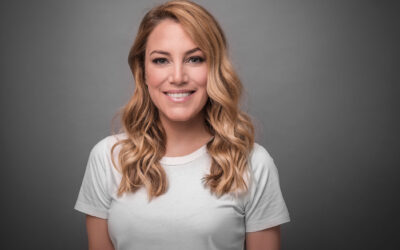
Dr. Todd Snyder, DDS
Dr. Todd Snyder practices cosmetic and restorative dentistry at Aesthetic Dental Designs in Laguna Niguel, California. He graduated from the UCLA School of Dentistry and completed advanced training at the F.A.C.E. Institute. He is the 77th Accredited Fellow of the American Academy of Cosmetic Dentistry, a distinction held by a small number of dentists worldwide. His practice serves patients from Laguna Niguel, Aliso Viejo, Mission Viejo, Dana Point, Laguna Beach, San Juan Capistrano, and surrounding South Orange County communities.
Dr. Snyder offers clear aligner therapy and comprehensive orthodontic evaluations as part of smile design. The practice provides cosmetic dentistry, smile makeovers, and dental crowns for patients seeking complete aesthetic improvement.
Sources
- Alhafi ZM, Hajeer MY, Alam MK, Jaber ST – Quality and stability of orthodontic treatment outcomes with clear aligners versus fixed appliances: a systematic review and meta-analysis, Eur J Orthod (2025)
- Centers for Disease Control and Prevention – About Periodontal (Gum) Disease (2024)
- Centers for Disease Control and Prevention – Gum Disease Facts
- National Institute of Dental and Craniofacial Research – Periodontal (Gum) Disease: Causes, Symptoms, and Treatments
- American Association of Orthodontists – Adult Orthodontic Treatment
- BMC Oral Health – Pain comparison study between clear aligners and fixed appliances (2023)
- Journal of Clinical Orthodontics – Biomechanics of clear aligner therapy (2024)
Last reviewed: September 2026
Determining Your Path to Straight Teeth
Clear aligner candidacy rests on case complexity, periodontal health, and compliance. Patients with mild to moderate malocclusion, healthy gums, and a track record of following through on health recommendations are excellent candidates. Those with severe rotations, skeletal discrepancies, active gum disease, or uncertain compliance need braces or a hybrid approach. An evaluation with a dentist experienced in both aligner and fixed appliance therapy provides a definitive answer and a treatment plan matched to the case. For residents of Laguna Niguel, Aliso Viejo, Mission Viejo, Dana Point, and the wider South Orange County area, understanding candidacy before starting treatment saves time, money, and the frustration of a mid-treatment conversion.
Continue learning about cosmetic dentistry:
Cosmetic Dentistry | Smile Makeovers | Cosmetic Dentistry Guide | Gum Contouring Guide